
What is Holter?
Holter is a portable device that continuously records cardiac activity for 24 or 48 hours while you perform your daily activities.
Holter Rhythm (ECG)
Continuously records the heart's electrical activity to detect arrhythmias and other heart rhythm disorders.
24-48 Hours
Continuous recording
Cardioline Walkfree: Modern Holter for Comfortable Daily Life
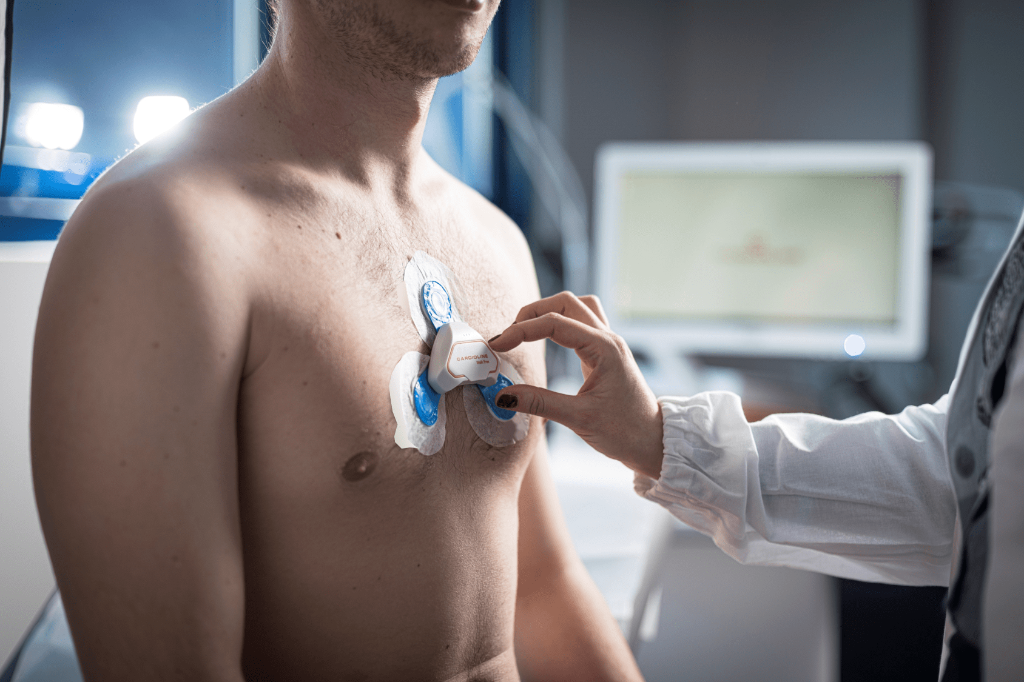
Our clinic uses the Cardioline Walkfree, a modern portable Holter device. Its small, lightweight design (only 30 g) and wireless operation allow the patient to move freely without cables or bulky accessories. It records 3 or 7 leads at high resolution continuously for 24 or 48 hours.
The clinical importance of Holter monitoring is invaluable: a standard resting ECG records only 10 seconds of electrical activity, while prolonged recording increases the likelihood of detecting paroxysmal arrhythmias that occur at night, during physical activity, or in stressful situations. Atrial fibrillation — the main risk factor for stroke — is often paroxysmal and will be "missed" without a Holter.
Analysis is performed with specialist software that processes millions of heartbeats, automatically identifying abnormalities. D. Boukis verifies and interprets every finding, issuing a detailed report with the number and type of ectopic beats, duration of arrhythmias, nocturnal bradycardia, and specific therapeutic recommendations.
Holter Rhythm - Details
Holter Rhythm
What it records:
- • Heart rate (pulse)
- • Arrhythmias (atrial, ventricular)
- • Heart rhythm pauses
- • Electrical conductivity
Indications:
- • Heart palpitations
- • Dizziness/fainting
- • Atrial fibrillation
- • Pacemaker follow-up
Duration: 24-48 hours
When is Holter needed?
How is the Holter examination performed?
Device Placement
You come to the clinic and we place the portable Holter device. Small electrodes are placed on the chest to record cardiac rhythm.
Daily Activities
You wear the device for 24-48 hours and perform your normal activities. Keep a diary with symptoms and activities (meals, exercise, sleep).
Device Return
Return to the clinic for device removal and data download.
Analysis & Results
We analyze the data and provide you with a detailed written report with all findings and recommendations.
Tips during Holter
Do
- ✓ Keep detailed diary
- ✓ Note symptom times
- ✓ Perform usual activities
- ✓ Wear comfortable clothes
- ✓ Sleep with the device
Don't
- ✗ Don't take a bath/shower
- ✗ Don't wet the device
- ✗ Don't remove electrodes
- ✗ Avoid magnets/metal detectors
- ✗ Don't use electric blanket
💡 Important:
The diary is crucial! Note every symptom (palpitations, chest pain, dizziness) with exact time to correlate with the recording.
Holter Advantages
Continuous Monitoring
24/7 recording, even while sleeping or active.
Non-Invasive
Completely safe and comfortable, no pain or side effects.
Rare Arrhythmia Detection
Detects arrhythmias not visible on simple ECG.
Real Conditions
Recording during normal daily activities.
Therapy Assessment
Checking antiarrhythmic medication effectiveness.
Quick Results
Report within 2-3 days of device return.