
What is an Electrocardiogram?
ECG is a simple, fast and non-invasive examination that records the heart's electrical activity. At our clinic we use the Cardioline ECG 200S, one of the most advanced electrocardiography systems.
Cardioline ECG 200S
- High recording accuracy with advanced algorithms
- Immediate arrhythmia and ischemia detection
- Digital storage and comparison with previous ECGs
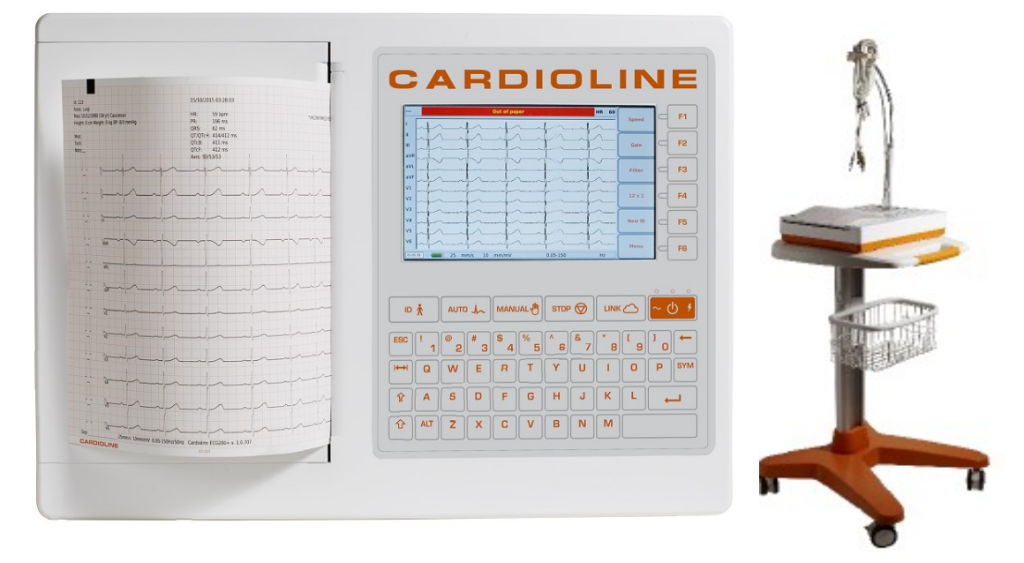
Cardioline ECG 200S: Precision That Makes the Difference
The Cardioline ECG 200S is a professional 12-lead electrocardiography system, recognised by hospitals and specialist clinics across Europe. Its high-resolution recording technology allows the detection of subtle changes that may escape older systems — a critical factor for early diagnosis.
The digital storage system enables immediate comparison with previous ECGs to monitor progression. This is particularly important in patients with known coronary disease, arrhythmias or arterial hypertension: detecting even small ECG changes relative to a previous recording can reveal deterioration or, conversely, improvement in treatment response.
Beyond recording, it is the evaluation of the ECG by a specialist cardiologist that gives the examination its clinical value. D. Boukis analyses every ECG in detail, identifying rare conditions (Brugada syndrome, Long QT, WPW), early signs of left ventricular hypertrophy, and ischaemic changes requiring immediate investigation. Results are available within minutes.
When is an Electrocardiogram needed?
Arrhythmia Diagnosis
Palpitations, tachycardia, bradycardia
Ischemia Check
Chest pain, angina
Myocardial Infarction
Acute heart attack diagnosis
Preoperative Assessment
Check before surgery
Therapy Monitoring
Arrhythmia follow-up
Heart Check-up
Preventive check
How is ECG performed?
1. Preparation
The patient lies down on an examination bed and electrodes are placed on the chest, arms and legs.
2. Recording
The Cardioline ECG 200S records the heart's electrical activity for a few seconds. The examination is completely painless.
3. Evaluation
The cardiologist analyzes the ECG and identifies any abnormalities in cardiac rhythm or ischemia signs.
Duration
5-10 minutes
ECG Advantages
Immediate Diagnosis
Results in minutes
Non-Invasive
Painless and safe examination
Economical
Low cost, high value
High Accuracy
Cardioline ECG 200S technology